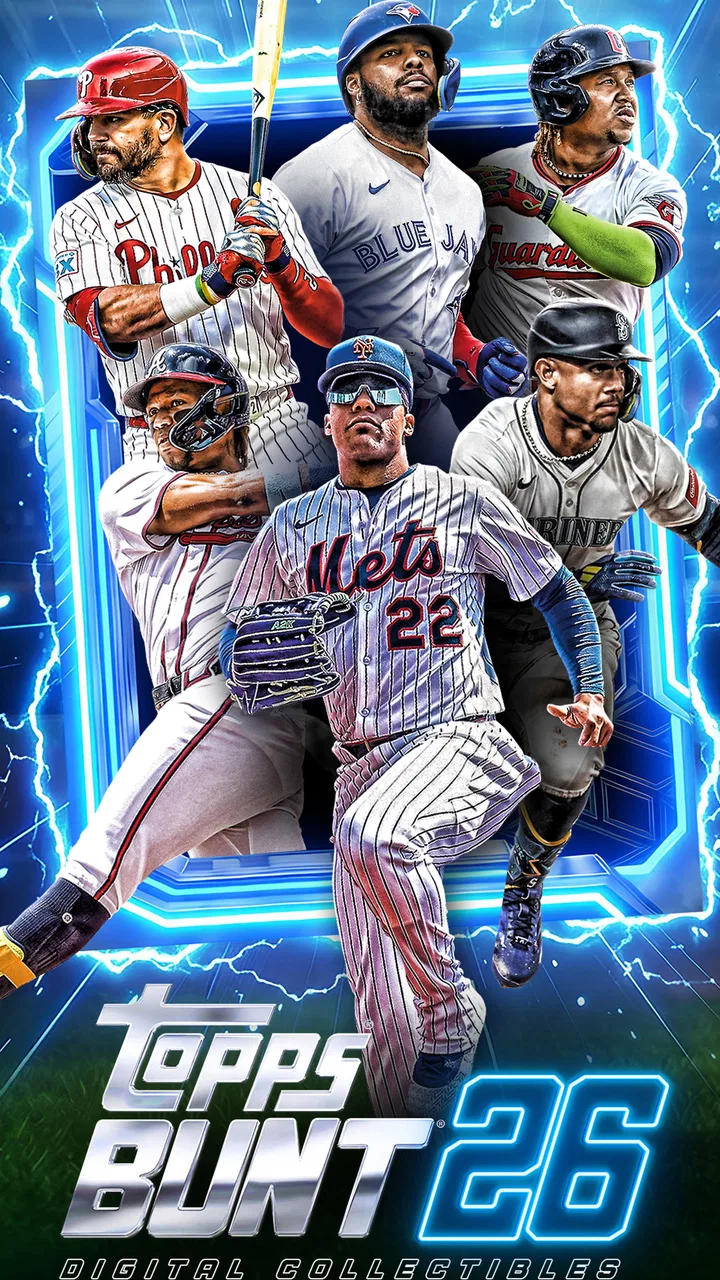
Topps® BUNT® MLB Card Trader
- 3.9
- Rating
- 1.00M
- Installs
- Free
- Price

 Analysis by App-foxy
I spent time with Topps® BUNT® MLB Card Trader as a digital baseball-card collecting app, and its central idea is easy to understand: build a collection, trade cards with other fans, and use that collection in competition. What makes it different from a normal sports news app or a physical card album is the social layer. The cards are not simply items I viewed and forgot; they became the basis for decisions about what to keep, what to exchange, and how much attention I wanted to give the hobby.
This is a free sports app from The Topps Company, Inc., aimed at an Everyone audience. It has been available since May 21, 2014, and the current version is 20.14.2. The app has passed one million installs and holds a 3.9 average from around 17 thousand ratings, so it clearly has a substantial audience while also leaving room for criticism. I think that balance is fair: the collecting concept is appealing, but the experience asks for patience and can feel more complicated than a casual baseball fan expects.
Trading is the feature that changes the whole experience
The most important capability here is not merely opening digital packs. It is the ability to trade baseball cards with other people around the world. That one feature changes the app from a private checklist into a small marketplace of preferences. A card that has little value to me may be exactly what another collector wants, while a card I am missing can become worth more to me than its general popularity would suggest.
You May Also Like

 Blood Strike: 2.5 Anniversary
Blood Strike’s Loadouts Turn Every Drop Into a Tactical Gamble
A close look at Blood Strike’s custom loadouts: how fast access to signature weapons reshapes its battle royale rhythm, rewards preparation, and narrows the gap between fights.

 Pandora - Music & Podcasts
Pandora’s Music Is Easy to Start, but Harder to Recover
Pandora’s strength is its low-effort path from a seed to a station. Its weak spot is how much confidence it asks you to place in connection, setup, and quiet recovery.

 8 Ball Pool
 Is Built on Rivalries, Rematches, and Routine
A close look at the rivalries, rematches, shared routines, and unanswered safety questions that turn a quick pool match into a persistent mobile community.

 Samsung Music
’s Quiet Strength Is Playing What You Already Own
Its reach comes less from spectacle than from dependable access to a personal library. That simplicity is both the app’s strongest retention engine and its ceiling.

 AccuWeather: Weather Radar
AccuWeather Review: A Quick, Clear Forecast for Everyday Decisions
For everyday plans, the best forecast is the one you can understand quickly. AccuWeather makes rain timing, radar, and local conditions easy to act on, with a few trade-offs.

 Hill Climb Racing
Why Hill Climb Racing Still Turns Crashes Into One More Run
A tiny car, a bumpy hill and one more upgrade: Hill Climb Racing keeps resurfacing because its simple chaos makes every near-miss feel personal.
More From Our News Desk



In practice, this means I am constantly thinking in two ways. First, I look at a card as part of my own collection: does it complete a player, team, or visual set that I care about? Second, I consider it as a possible trade piece. That second perspective gives the app its strongest sense of involvement. I am not just waiting for the next reward; I am making choices about the direction of my collection.
The real strength is turning duplicates into decisions. In a physical album, an unwanted duplicate occupies space. In BUNT, it can become a reason to contact another fan and negotiate. That does not guarantee a successful exchange, and it does not remove the need to judge offers carefully, but it gives otherwise ordinary cards a practical purpose.
What the trading focus means for new users
A new player should not expect every card to be equally useful or every trade request to be obvious. The first few sessions are better spent learning the collection screens and noticing which cards I personally want before trying to exchange everything. If I trade away items too quickly, I may later discover that I needed them for a collection goal or simply preferred having them.
My advice is to create a simple personal rule before trading: keep cards connected to favorite teams or players, and treat the rest as possible trade material until I understand their role. This avoids the common beginner mistake of chasing every attractive card while losing track of what the collection is supposed to mean to me.
The social nature also means that patience matters. A trade is not automatically good because it contains more cards on one side. A larger pile can still be less useful than one card that fills a gap in my collection. I found that comparing relevance, not just quantity, led to better decisions.
How a normal session develops
I would usually begin by checking what had arrived in the collection and identifying cards that caught my attention. From there, the session naturally splits into two activities: organizing what I own and deciding whether to pursue something I am missing. The first is quiet and personal; the second depends on interaction with other fans.
That rhythm makes the app suitable for short visits. I can look through cards during a break, note what I want to keep, and return later when I have more time to consider trades. It also supports longer sessions when I want to concentrate on building a more coherent collection. The experience is not demanding in the same way as a traditional action game, but it still rewards attention.
The store summary describes collecting, trading, and playing against fans around the world, and that combination is important. If I only wanted to browse baseball information, a news or statistics app would be more direct. If I wanted a physical hobby, real cards would provide a different kind of satisfaction. BUNT sits between those choices by making the collection portable and interactive.
Using the app without losing sight of the hobby
One useful habit is to separate collecting goals from competitive goals. I may want a visually appealing set of cards, a group connected to a favorite player, or simply a varied baseball collection. Those goals do not always point toward the same trades. A card that helps me compete may not be the card I most enjoy owning, and choosing between those priorities is part of the app’s appeal.
I also found it helpful to review my collection before making any purchase. The app is free to download and use, but it includes in-app purchases ranging from $0.99 to $99.99 per item. That broad range makes self-control important. Spending can feel justified when I am close to obtaining a desired card, yet the excitement of collecting can make “one more” purchase feel easier than planned.
For that reason, I would decide on a personal limit before opening paid content. I would also ask whether I am buying because a card fits my collection or because I am frustrated by not getting it. That small pause protects the enjoyable part of the hobby and makes the free starting point more meaningful.
The best everyday scenario is a short, social baseball break
The strongest use case for me is a baseball fan who wants a hobby that fits around an ordinary day. Imagine finishing lunch, opening the app for a few minutes, checking new cards, and looking at possible trades. There is enough structure to feel productive, but no need to commit to a full match or a long uninterrupted session. Later, after work or school, I can return to a trade decision with a clearer idea of what I actually want.
This scenario works especially well for someone who already enjoys discussing players and teams. The collection gives those conversations a practical focus. Instead of simply saying that I like a player, I can build around that interest and look for cards that make the collection feel personal. The trading feature then adds a reason to stay involved after the initial download.
It is also a good fit for friends or family members who enjoy comparing collections. The app’s worldwide fan-to-fan approach means the hobby is not limited to people living nearby or to whatever physical cards happen to be available in a local shop. That wider pool can be exciting, although it also means that the experience depends on how much effort I want to put into social interaction.
When the app is better than physical cards
Digital collecting has practical advantages. I do not need storage space, protective boxes, or a way to carry a binder. I can check the collection from a compatible mobile device, and trading does not require mailing a physical card. For someone who values convenience and interaction more than the feel of cardboard, that is a meaningful improvement.
The digital format also makes it easier to experiment. I can change the direction of my collection without physically rearranging shelves or buying another binder. A trade can be considered as part of a larger collection strategy rather than as a permanent exchange of objects that I must package and send.
However, physical cards still offer something BUNT cannot reproduce: texture, display value, and the satisfaction of holding an object connected to baseball. I would choose physical collecting if the tactile part of the hobby is the main reason I enjoy cards. I would choose BUNT if I care more about access, trading, and keeping the collection with me.
When another sports app is the better choice
Compared with a baseball news app, BUNT is less useful when my priority is quick scores, schedules, injury updates, or detailed statistical research. Its purpose is not to replace those tools. A news app will usually get me to game information faster, while this app asks me to spend time with cards and collection decisions.
Compared with a conventional mobile sports game, it is also a different kind of entertainment. I would not choose it if I wanted constant action, direct control, or a fast competitive match. The appeal is closer to collecting and social strategy than to controlling players on the field.
That distinction helps set expectations. BUNT works when I want baseball fandom to become a slower, more thoughtful activity. It is less suitable when I want an immediate answer, a complete simulation, or a game that can be enjoyed without paying attention to collection management.
The tradeoffs become clearer after the first excitement
The biggest limitation is that the social experience can require work. Trading sounds simple, but making a satisfying exchange depends on knowing what I want, understanding what I can offer, and accepting that not every interaction will lead anywhere. Someone who prefers a completely solo app may find this friction unnecessary.
There is also a learning curve around value. The app presents cards as collectible items, but personal value and perceived trade value are not always identical. A beginner may assume that a visually impressive card is automatically the best asset, only to realize that it does not help with the collection they are building. I had better results when I treated the app as a hobby requiring observation rather than as a sequence of obvious upgrades.
The purchase system is another point to consider. Because the app is free but offers paid items, it can be enjoyed without an upfront price while still presenting opportunities to spend. That model suits users who are comfortable setting boundaries and walking away from a tempting card. It is a weaker fit for anyone who dislikes collectible systems with optional purchases or finds it difficult to stop once a goal is close.
The 3.9 average suggests that the app works well for many people but is not universally smooth or satisfying. My own view is that this reflects the nature of the product: fans who enjoy digital collections and trading can find a lot to do, while people expecting a straightforward baseball game may feel that the core activity is too slow or specialized.
How to avoid common frustrations
I would start with one narrow goal instead of trying to collect everything. Focusing on a favorite team, player, or visual style makes decisions easier and reduces the pressure to chase every new card. It also gives trades a clear purpose, which is more useful than accumulating items without knowing why I want them.
Next, I would keep a small mental separation between cards I would be disappointed to lose and cards I am genuinely willing to exchange. That distinction sounds obvious, but it prevents emotional trades. If I hesitate every time I see an offer, the card probably belongs in the first group.
Finally, I would treat paid purchases as optional accelerators, not requirements for enjoying the app. The free entry point is enough to discover whether collecting and trading actually suit me. Only after spending time with the basic loop would I decide whether an in-app purchase adds value to my particular goal.
Device and audience considerations
The app supports Android devices running version 7.0 or later, which makes it accessible to many users with older compatible phones and tablets. It is rated Everyone, so its subject matter is appropriate for a broad audience. Even so, younger users may need guidance around optional spending, especially because the available purchase range reaches from small amounts to much larger individual items.
I would also consider the quality of the device experience before committing to the hobby. A larger screen can make browsing a collection more comfortable, while a phone is more convenient for quick checks and trade decisions. The app’s value comes from returning often enough to manage the collection, so an awkward device experience could make the social side feel more tiring than enjoyable.
Who will get the most from this digital collection
The best audience is a baseball fan who enjoys collecting but does not need physical cards. This person will appreciate the ability to organize a personal collection, turn duplicates into trade opportunities, and interact with fans beyond their local area. They should also be comfortable with a slower pace and willing to learn through experience rather than expecting every card and trade to explain itself immediately.
It is particularly appealing to someone who likes making small decisions over time. The app rewards the question, “What do I want my collection to become?” more than the question, “How quickly can I finish?” That makes it a good companion for short daily sessions and a poor choice for someone looking for a single dramatic play session.
I would recommend skipping it if the main goal is live baseball information, detailed analysis, or a traditional sports game. I would also be cautious about recommending it to anyone who dislikes optional purchases in collectible apps. The free price is a useful way to try it, but the presence of paid items is part of the experience and should be considered before investing serious time.
For me, the deciding factor is the trading capability. It gives the cards a purpose beyond display and creates the most distinctive reason to return. The app is not a replacement for a physical collection, a baseball news service, or an action-oriented game. It is a focused digital hobby built around ownership, exchange, and personal goals.
After using it, I see Topps® BUNT® MLB Card Trader as a worthwhile free starting point for fans who enjoy the social side of collecting. I would begin slowly, choose a clear collection theme, protect the cards I genuinely value, and avoid spending until the basic routine feels rewarding. If that approach sounds enjoyable, the app has enough depth to become a regular baseball pastime; if it sounds like unnecessary management, another kind of sports app will probably suit you better.
FAQs for Topps® BUNT® MLB Card Trader
01What is Topps® BUNT® MLB Card Trader?
Topps® BUNT® MLB Card Trader is a digital trading card app that allows users to collect, trade, and play with officially licensed Major League Baseball cards. It offers daily releases, special events, and challenges where collectors can earn exclusive cards and rewards. The app combines the nostalgia of card collecting with modern digital features.
02Is Topps® BUNT® MLB Card Trader free to play?
Yes, the app is free to download and play. However, it offers in-app purchases for premium content, such as exclusive card packs and special edition cards. While you can enjoy the game without spending money, these purchases can enhance your collection and gaming experience.
03How does trading work in the app?
In Topps® BUNT® MLB Card Trader, trading is a core feature. Users can propose trades with other collectors, offering cards they own in exchange for desired ones. The app provides a secure platform for negotiations, allowing users to chat and finalize trades. Successful trading requires strategy and understanding of card values.
04Are there any special events in the app?
Yes, Topps® BUNT® MLB Card Trader frequently hosts special events and challenges. These events often coincide with real-world MLB happenings and offer unique rewards and exclusive card releases. Participating in events can boost your collection and provide opportunities to earn rare cards.
05What platforms is the app available on?
Topps® BUNT® MLB Card Trader is available on both Android and iOS platforms. You can download it from the Google Play Store for Android devices and the Apple App Store for iOS devices, ensuring a wide range of users can enjoy the app's features and community.
Pros
- Extensive collection of MLB cards.
- Engaging daily challenges and rewards.
- User-friendly interface and navigation.
- Regular updates with new card releases.
- Strong community and trading options.
Cons
- In-app purchases can be costly.
- Requires a stable internet connection.
- Occasional app crashes reported.
- Limited offline functionality.
- Some features locked behind paywalls.

Topps® BUNT® MLB Card Trader
Gallery